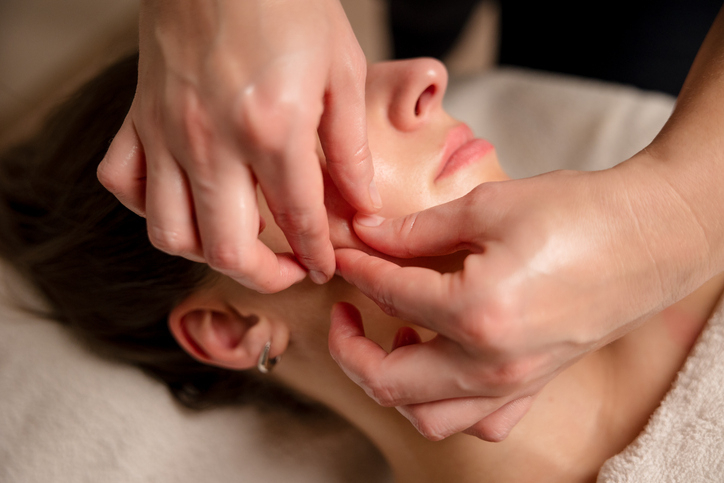
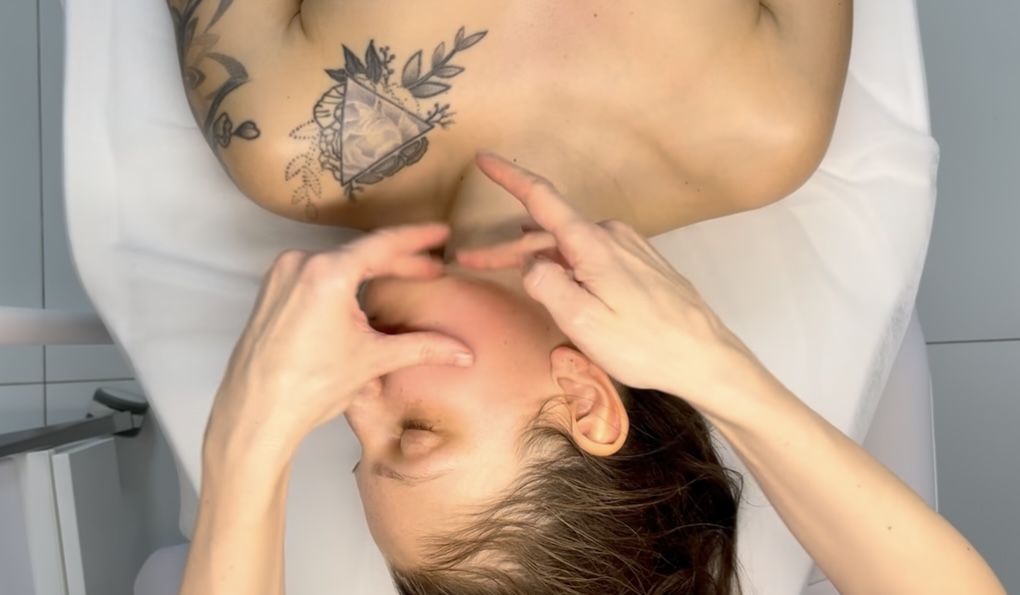
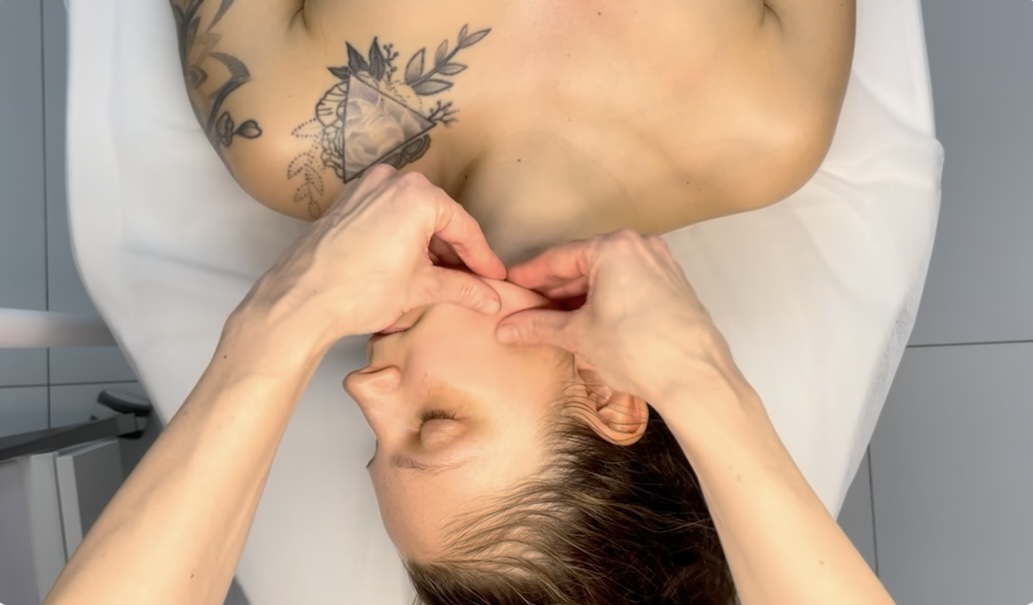
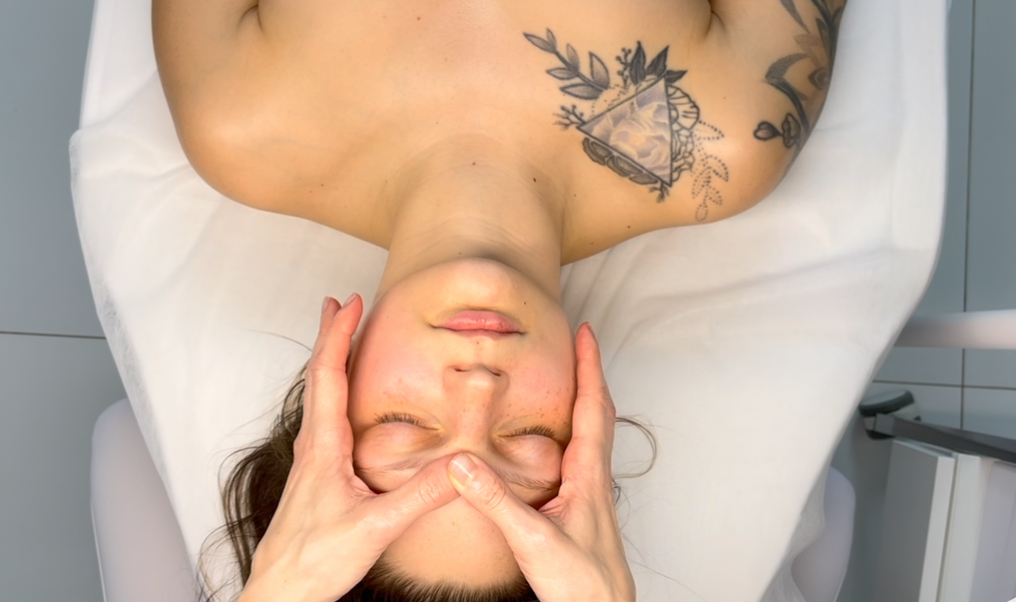
Kobido facial massage is considered one of the most advanced manual facial therapy techniques. Its effectiveness does not come from a single movement or a single technique, but from the combination of many elements of manual work organized into a coherent and logical system.
This technique originates from traditional Eastern bodywork practices and has been developed for centuries as a manual ritual requiring precision, control, and an understanding of the anatomical structures of the face.
Unlike many modern cosmetic treatments, Kobido does not act only on the surface of the skin. This technique simultaneously influences:
the skin
facial expression muscles
fascial tissues
microcirculation
the nervous system
This multi-level approach is why Kobido massage is often described as a natural manual facial lifting technique.
Why Kobido works – mechanism of action
The effectiveness of the massage results from sequential manual work, in which each stage of the treatment prepares the tissues for the following phases.
The mechanism of action can be simplified as:
→ tissue relaxation → mobilization of muscular structures → stimulation of circulation → activation of deeper tissues → improvement of skin tension
Each stage of the massage has a specific purpose and is not performed randomly.
Sequential structure of Kobido massage
Kobido massage follows a clearly defined structure of manual work.
The stages of the treatment occur in a specific sequence:
dry techniques + work with massage medium → tissue relaxation → muscle mobilization → lymphatic drainage → lifting techniques → pressure techniques and treatment closure
This structure allows different tissue layers to be addressed gradually and in a controlled manner.
Combination of multiple manual techniques
One of the reasons for the high effectiveness of Kobido massage is its extensive system of manual techniques. Unlike simple facial massages, this method combines different ways of working with the tissues.
During the treatment, the following techniques are used, among others:
superficial techniques – tissue preparation and relaxation
mobilizing techniques – release of muscular tension
point pressure techniques – regulation of neuromuscular tension
drainage techniques – support of lymphatic flow
lifting techniques – improvement of skin firmness
The combination of these elements creates a complex system influencing the tissues of the face.
Variation in manual working rhythm
A characteristic feature of Kobido massage is the variation in the speed of hand movements.
Two main working rhythms are typically used during the treatment.
Calming phases:
tissue relaxation → calming of the nervous system → preparation of the skin and muscles for further work
Dynamic phases:
tissue stimulation → increased circulation → activation of biological processes
The variation in movement speed is an important element of the massage methodology and contributes to its lifting effect.
Influence on different facial structures
In Kobido massage, manual work is not limited only to the skin of the face. The treatment includes several interconnected anatomical areas.
work on the scalp → release of cranial and cervical tension
work on the face → mobilization of facial expression muscles
work on the neck → release of muscular tension
work on the décolleté → integration of facial work with the upper body
This approach allows the face to be treated as part of a larger system of muscular and fascial connections.
Shiatsu techniques in Kobido massage
An important element of the Kobido technique is the use of selected Shiatsu techniques.
Shiatsu involves precise pressure applied to specific points on the face and head, usually performed with:
the thumb → the fingertips → the base of the palm
Pressure applied to these points leads to:
stimulation of sensory receptors → modulation of nervous tension → activation of relaxation mechanisms
Shiatsu techniques complement muscular work and deepen the relaxation effect.
Influence of Kobido massage on skin condition
Mechanical stimulation of tissues during the massage may lead to a range of biological responses.
stimulation of microcirculation → improved tissue oxygenation
activation of cellular metabolism → support of regenerative processes
stimulation of fibroblasts → production of collagen and elastin
normalization of muscle tension → softening of expression lines
Why Kobido is called a natural lifting treatment
The combination of multiple manual techniques allows Kobido massage to influence different tissue layers of the face.
muscle mobilization → improvement of tissue tension
circulation stimulation → better nourishment of the skin
lifting techniques → facial contour sculpting
lymphatic drainage → reduction of swelling
As a result, improvements in skin tone and facial freshness can be achieved without invasive methods.
Who Kobido massage is suitable for
Kobido massage is used in facial therapy as a manual technique that supports improvement of skin tone, microcirculation, and reduction of muscular tension. The massage is applied both in preventive skin aging care and when addressing specific aesthetic concerns.
It is most commonly performed for individuals experiencing:
loss of skin firmness and elasticity
sagging of the facial contour
expression lines and wrinkles
tension in facial muscles and the jaw area
facial swelling
dull or tired-looking skin tone
slowed skin microcirculation
lymphatic stagnation and facial puffiness
tension in the muscles of mastication (for example with bruxism)
tension headaches
chronic stress and increased nervous tension
The treatment is also sometimes performed preventively in younger individuals whose goal is to maintain healthy skin condition and limit the formation of excessive facial muscle tension.
Regular manual work with the facial tissues may support normal muscle mobility, improve blood circulation in the skin, and enhance lymphatic drainage.
Why the effects of Kobido massage are often visible after the first treatment
One of the distinguishing characteristics of Kobido massage is that some of its effects can be noticeable immediately after the treatment. This results from the nature of the manual work and its influence on muscular tension and tissue circulation.
During the massage, the muscular structures of the face relax. In everyday life these muscles often remain in a state of chronic tension. This includes muscles responsible for facial expressions as well as structures associated with tension in the neck and head.
As a result, after the treatment it is possible to observe:
visible facial relaxation
reduction of facial muscle tension
a feeling of “lightness” in the head and face area
improvement of skin freshness and tone
subtle lifting of the facial contour
This effect results mainly from the combination of muscular relaxation, improved microcirculation, and enhanced lymphatic drainage. As a result, the face may appear more rested and toned immediately after the treatment.
At the same time, it is important to remember that the full effects of Kobido massage develop gradually with regular treatments.
Kobido massage combined with selected techniques
Treatment combination
Main effect
Why it works well with Kobido
Kobido + facial intradermal therapy
intensive tissue and microcirculation stimulation
Kobido prepares the tissues, while facial intradermal therapy enhances skin regeneration and biostimulation.
Kobido + LED therapy
regeneration and anti-inflammatory action
LED light supports skin repair processes after intensive manual work
Kobido + face taping
maintenance of lifting effects
taping helps maintain muscle relaxation and supports lymphatic drainage
Kobido + superficial peeling
smoothing and brightening of the skin
gentle exfoliation improves skin texture and prepares it for regeneration
Kobido + sheet mask
hydration and skin soothing
after intensive manual work the skin absorbs active ingredients more effectively
Kobido + aromatherapy or herbal stamps
deep relaxation and neurosensory stimulation
combining manual and sensory stimuli supports the reduction of muscular tension
Why combined treatments increase the effectiveness of Kobido
The use of additional techniques allows the treatment to influence tissues more broadly.
Kobido manual work → mobilization of muscles and fascia → supporting techniques → improved microcirculation and regeneration → enhanced treatment results
For this reason, Kobido massage can be treated not only as a single facial massage technique but also as the foundation for more advanced manual therapy protocols.
In clinical practice, combined therapies not only improve treatment effectiveness but also increase the value of services offered in a clinic. Expanding treatment protocols can lead to greater client satisfaction and naturally improve the profitability of performed treatments.
Frequently asked questions about Kobido massage
Does Kobido massage really work?
Kobido massage works through intensive stimulation of facial tissues, facial expression muscles, and microcirculation. Manual techniques improve blood and lymph flow, reduce muscular tension, and support the natural regenerative processes of the skin.
How many treatments are needed to see results from Kobido massage?
Some effects may be visible after the first massage, particularly in the form of facial muscle relaxation and improved microcirculation. More lasting results appear when the massage is performed regularly as part of a treatment series.
How long do the effects of Kobido massage last?
The duration of the results depends on skin condition, facial muscle tension, and lifestyle factors. In professional practice, Kobido massage is often performed in a series of treatments to maintain and stabilize the achieved effects.
Is Kobido massage painful?
Kobido massage should not be painful, although some lifting techniques may be felt as intensive tissue work. The treatment usually leads to muscle relaxation and deep relaxation.
How is Kobido massage different from a regular facial massage?
Kobido massage is a more complex manual technique. It involves work on different tissue structures, uses varying movement rhythms, and combines drainage, mobilizing, and lifting techniques.
If you want to learn Kobido massage and understand the manual techniques used in facial tissue therapy, they are explained in detail in our Kobido massage course.
If you want to learn effectively and at your own pace, you’re in the right place. Our courses combine years of hands-on experience with detailed treatment protocols, instructional videos, and advanced cosmetology-medical educational materials—designed to support your professional growth regardless of where you are based.
You choose a course and gain immediate access to all online materials after purchase. You learn at your own pace, with 12 months of access to the content and no time pressure. After completing the course, you receive a certificate, and the knowledge you gain can be applied in practice right away.
Beauty Expert Online does not support older browser versions that may not support all site functionalities. Please use the latest browser versions Google Chrome, Firefox, Microsoft Edge or others.