Menu

Matcha herbal compress massage – preparation, proportions, and technique

Matcha herbal compress massage – preparation, proportions, and technique

Matcha herbal compress massage – preparation, proportions and technique

Herbal compress massage combines heat, pressure and plant-based ingredients into a single therapeutic treatment. In professional practice, it is not only a relaxation method, but a technique that directly influences microcirculation, lymphatic flow and tissue tension.

While this treatment originates from traditional Eastern therapies, modern cosmetology explains its effects through clear physiological mechanisms. It integrates thermal stimulation, mechanical compression and the biological activity of plant-based compounds.

Adding matcha to the compress introduces an antioxidant and revitalizing component. Finely ground green tea is rich in polyphenols and catechins, which support skin protection and overall regeneration.

To achieve safe and consistent results, it is essential to understand both the mechanism of herbal compress massage and the proper construction of the compress.

How herbal compress massage works

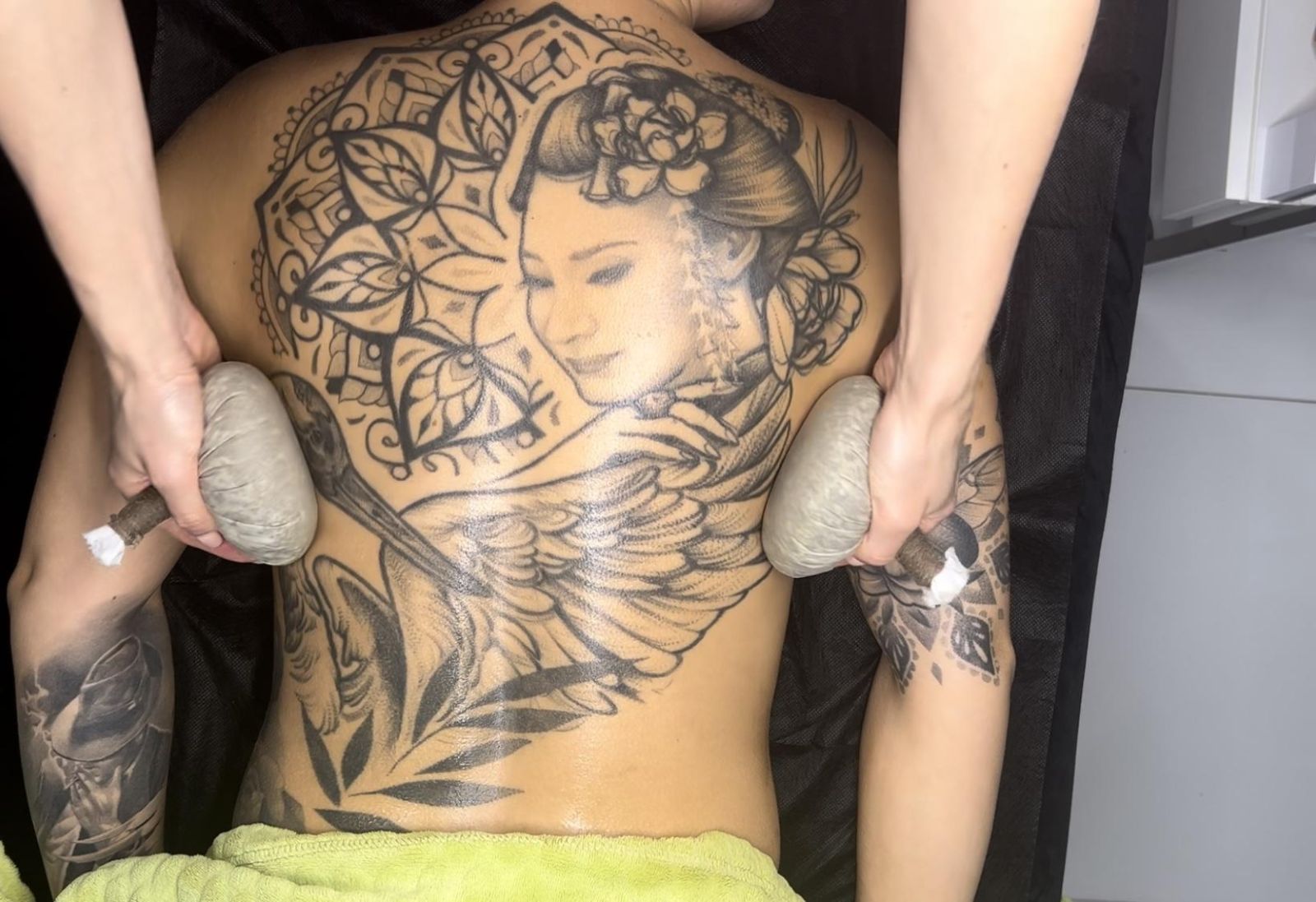
The treatment involves applying a heated herbal compress to the skin using different movement techniques

  • static placement
  • compression
  • rhythmic stamping movements
  • gliding movements performed with oil

The compress is typically heated to around 140–160°F (60–70°C), although the temperature perceived by the skin is lower due to rapid heat dissipation.

thermal action
→ physiological stimulus
→ vascular response
→ improved microcirculation

Physiological effects of herbal compress massage

Thermal effect

Heat affects the skin and soft tissues by

  • dilating capillaries
  • increasing blood flow
  • enhancing oxygen delivery
  • improving collagen fiber elasticity

vasodilation
→ improved circulation
→ better tissue nourishment

Heat also reduces muscle tension by modulating nerve signal transmission and decreasing pain receptor sensitivity.

Compression effect

Mechanical pressure supports fluid movement within the tissues

  • shifts interstitial fluids
  • stimulates lymphatic flow
  • reduces tissue congestion

compression
→ lymphatic stimulation
→ reduced fluid retention

Phytochemical effect

Heat promotes the release of plant-based compounds that support skin condition

  • essential oils
  • phenolic compounds
  • lipid-soluble components

heat
→ increased lipid fluidity in the stratum corneum
→ improved diffusion of selected compounds

Why use matcha in herbal compress massage

Matcha, derived from Camellia sinensis, is a concentrated source of bioactive plant compounds.

  • catechins (including EGCG)
  • polyphenols
  • chlorophyll
  • antioxidants

polyphenols
→ neutralization of free radicals
→ support for collagen structures

Matcha provides primarily

  • antioxidant support
  • toning effect
  • skin revitalization

Indications and skin types

Herbal compress massage with matcha is suitable for

  • dull and tired-looking skin
  • impaired microcirculation
  • muscle tension
  • stress-related skin fatigue

microcirculation
→ improved oxygen delivery
→ healthier skin appearance

How to prepare a matcha compress

Each compress should weigh approximately 200–250 g, ensuring stable heat retention and effective pressure.

Thermal base – about 70–80%

  • jasmine rice – 150 g
  • desiccated coconut – 20 g

This base stores and gradually releases heat during the treatment.

Active ingredients – about 20–30%

  • matcha – 20 g
  • green tea – 10 g
  • calendula – 10 g
  • rose petals – 10 g

Matcha should not exceed 10% of the total weight, as excess powder can disrupt the structure of the compress.

Practical compress preparation step by step

To ensure proper performance in professional treatments, not only the ingredients but also the preparation method are essential.

Moistening the mixture

Before heating, the mixture should be lightly moistened with water or a hydrosol.

This allows for
→ better heat transfer
→ steam generation during treatment
→ even heat distribution

A dry compress releases heat unevenly and may cause discomfort.

Forming and wrapping the compress

Use a natural fabric such as cotton or muslin.

Preparation process
→ place the mixture in the fabric
→ form a firm ball
→ twist the top into a handle
→ secure with string or a band

The size of the working area should match the treatment area – smaller for the face, larger for the body.

Heating the compress

The best method is steam heating, which ensures even temperature distribution.

Options include
→ steam heater
→ towel or stone warmer
→ professional compress heater

Temperature control

Always test the temperature before applying to the client.

→ test on inner forearm
→ first contact should be brief
→ gradually increase intensity

For sensitive or vascular skin, use lower temperatures and shorter contact time.

Working time and rotation

At least two compresses should be used during the treatment.

→ one in use
→ one reheating

This maintains consistent temperature throughout the session.

A compress gradually loses heat and moisture, therefore
→ it should be replaced during treatment
→ it should not be reused after the session

Compresses are prepared fresh for each treatment and used once.

Technique of herbal compress massage

Step one – tissue preparation

Manual massage and oil application.

Step two – adaptation phase

Short static applications.

adaptation
→ vasodilation
→ mild erythema

Step three – working phase

Compression and rhythmic movements.

compression
→ improved metabolism
→ enhanced lymphatic flow

Step four – relaxation phase

Calming and stabilizing the tissues.

Expected results

The combination of thermal, compression and antioxidant effects may lead to

  • improved microcirculation
  • brighter skin appearance
  • reduced muscle tension
  • improved skin quality
  • deep relaxation

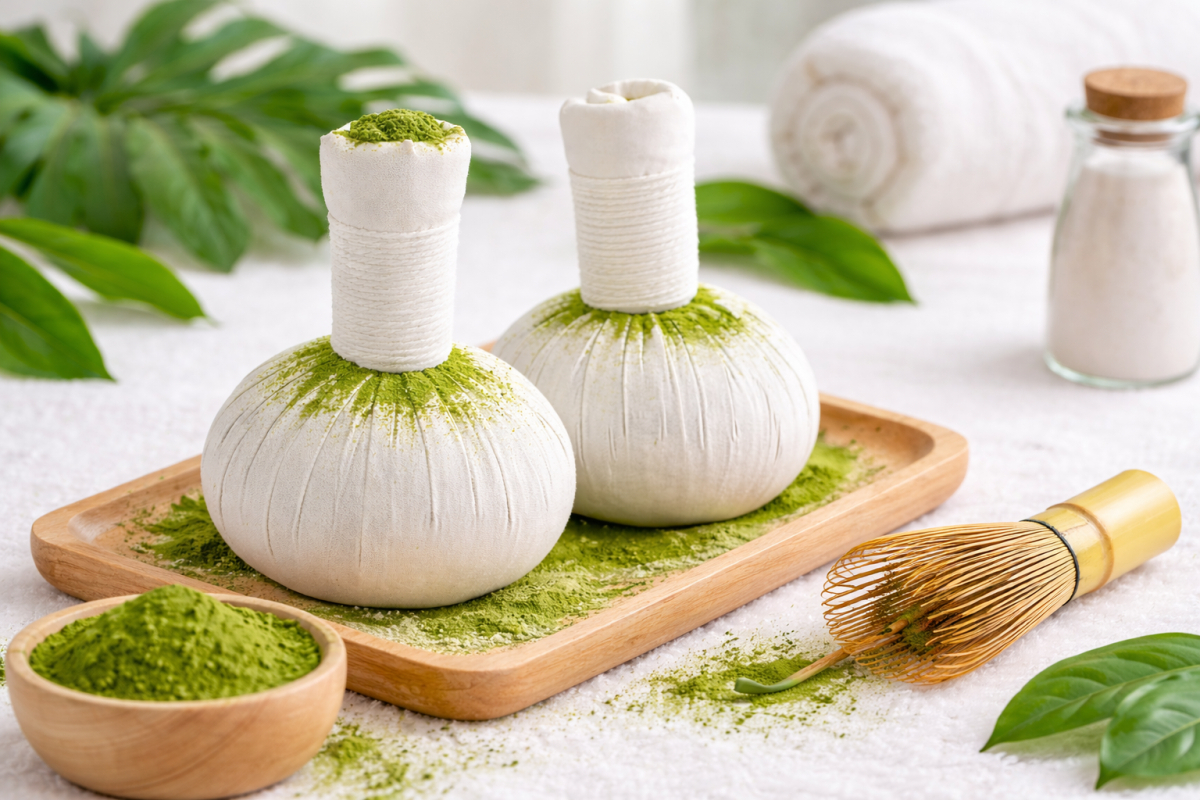
matcha herbal compress prepared for massage treatment

Key considerations during treatment

  • temperature control (max. ~160°F / 70°C)
  • careful initial contact with the skin
  • avoid use on compromised skin
  • fresh mixture for each session
  • work with at least two compresses

heat
→ vascular response

pressure
→ fluid movement

plant compounds
→ biological activity

Learn herbal compress massage

If you want to work with herbal compress massage professionally and understand its mechanisms, it is important to learn the complete system including technique, temperature control and ingredient selection.

Inside the course, you will learn

  • step-by-step technique
  • different types of herbal compresses
  • temperature control and safety
  • how the treatment affects skin and tissues

View course

Educating the beauty industry for 20 years

If you want to learn effectively and at your own pace, you’re in the right place. Our courses combine years of hands-on experience with detailed treatment protocols, instructional videos, and advanced cosmetology and medical educational materials—designed to support your professional growth regardless of where you are based.

View Courses


Educating the beauty industry for 20 years

How it works

You choose a course and get instant access to all materials. Study at your own pace with 12 months of access and no time pressure. After completing the course, you receive a certificate and can apply your knowledge in practice right away.

How it works
Our partners
Have a question?
Let us know
Message
Close
Beauty Expert Online does not support older browser versions that may not support all site functionalities. Please use the latest browser versions Google Chrome, Firefox, Microsoft Edge or others.

Do not show this message again