Lesson 1 – How a beauty practice really works and where sales actually happen
This is the first lesson in the free online course The Esthetician Practice Series, focused on operations, client experience, and revenue development. The course presents how a beauty practice truly functions — from the first client interaction, through front desk coordination, to practice management and professional training.
The program consists of 30 concise lessons published daily. Each lesson addresses specific real-life situations that occur in everyday practice and can be implemented immediately.
The curriculum is divided into three core areas:
front desk operations and client experience
beauty practice management
educator development and training structure
You may follow the lessons in sequence or return to selected topics at any time. All materials are available free of charge.
How a beauty practice works and where sales actually happen
The beauty practice as a structured client care system
A beauty practice operates as a structured client care system. Every stage of interaction influences purchasing decisions, client trust, and long-term retention. The treatment itself is only one component of the overall experience. Whether a client returns is determined by the entire visit flow — from the initial inquiry to leaving with a scheduled follow-up appointment.
The client journey includes:
initial client inquiry
appointment scheduling
pre-appointment communication
client check-in on the day of the visit
treatment delivery
treatment plan recommendation
home care product recommendation
visit closing
scheduling the next appointment
Each stage shapes how your practice is perceived and directly influences whether the client returns.
Where sales truly happen
In a beauty practice, sales do not begin at checkout. Most client decisions are made much earlier — often during the initial consultation or while the treatment is taking place.
Key decision-making moments include:
the quality of the initial greeting
communication style
the client’s sense of safety and confidence
how clearly the treatment is explained
how next steps are recommended
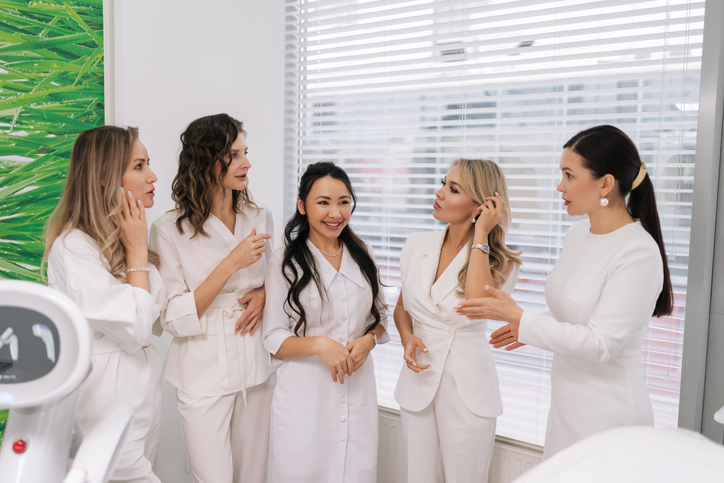
consistency of communication within the team
When communication is calm, clear, and clinically grounded, clients make purchasing decisions naturally — without feeling pressured.
The role of the treatment provider
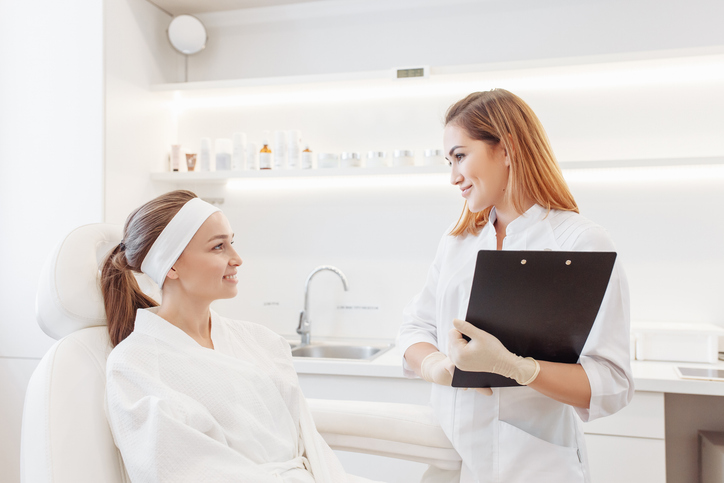
The professional performing the service functions as both practitioner and advisor. The treatment room creates the strongest opportunity to recommend continued care.
Key responsibilities include:
explaining the treatment objective
presenting a structured treatment plan
discussing appropriate home care
summarizing the visit
clearly communicating recommendations to the front desk
Failure to recommend next steps during the appointment is one of the most common reasons for decreased client retention.
The role of the front desk within the practice
The front desk organizes the administrative side of the visit and completes the sales process. Communication between the treatment provider and front desk must remain aligned and precise.
The front desk:
schedules the next appointment
finalizes retail purchases
reviews post-care instructions
manages the schedule
maintains client relationships
When alignment between the treatment room and front desk is missing, revenue is lost and operational flow becomes inconsistent.
Moments when practices lose clients
Most common situations:
no recommendation for follow-up
no structured treatment plan
no discussion of home care
rushed closing of the visit
unclear communication
no confirmation of the next appointment
A client who leaves without a clearly defined next step often does not return.
The ideal visit structure
welcome and preparation
treatment delivery
visit summary
treatment plan recommendation
communication to the front desk
scheduling the next appointment
home care recommendation
closing the visit
This structure maintains operational clarity and significantly improves client retention.
Example phrases to use during the appointment
Recommending the next appointment
“To maintain your results, I recommend scheduling your next visit in approximately four weeks.” “Let’s reserve your next appointment today to maintain consistency in your treatment plan.”
Summarizing the visit
“Today we focused on…, and the next step will be…” “To maintain stable, long-term results, repeating the treatment will be important.”
Transitioning to the front desk
“At the front desk, we’ll schedule your next appointment and select your recommended home care products.”
Quick overview
Visit stage
What happens
Impact on retention
Initial inquiry
Phone or online contact, information provided, appointment scheduled
Sets the tone for professionalism and influences booking decisions
Check-in
Greeting, verification, preparation for treatment
Creates comfort and reduces treatment-related anxiety
Treatment
Service performed according to protocol with ongoing communication
Client evaluates competence, safety, and quality
Summary
Review of treatment, skin response, and post-care instructions
Clarity supports informed continuation decisions
Recommendation
Presentation of treatment plan and follow-up schedule
A defined structure increases return frequency
Front desk
Scheduling and retail completion
Organized coordination supports continuity
Closing
Farewell and confirmation of next steps
The final impression influences satisfaction and referrals
A successful beauty practice is built on a structured client care system. Sales are not created at checkout — they develop throughout the entire client experience, from the first interaction to clearly defined next steps.
Consistent communication, clear recommendations, scheduled follow-up visits, and alignment between the treatment provider and front desk are the strongest drivers of retention and revenue stability.
This lesson is part of the free series The Esthetician Practice Series, which explores real-world client scenarios, communication strategies, and operational structure in detail.
If you want to expand your treatment skills, strengthen your clinical knowledge, or improve the structure of your beauty practice, explore the courses available in our online school.
If you want to learn effectively and at your own pace, you’re in the right place. Our courses combine years of hands-on experience with detailed treatment protocols, instructional videos, and advanced cosmetology-medical educational materials—designed to support your professional growth regardless of where you are based.
You choose a course and gain immediate access to all online materials after purchase. You learn at your own pace, with 12 months of access to the content and no time pressure. After completing the course, you receive a certificate, and the knowledge you gain can be applied in practice right away.
Beauty Expert Online does not support older browser versions that may not support all site functionalities. Please use the latest browser versions Google Chrome, Firefox, Microsoft Edge or others.