The Esthetician Practice Series is a blog-based series focused on real work inside a beauty practice. It covers appointment flow, client communication, front desk coordination, as well as practice management and training structure. Each article reflects situations that happen daily in real esthetic settings.
Content is presented in a concise, practical format. Each post focuses on one situation that can be applied immediately in day-to-day work.
Topics in this series include:
front desk workflow and client experience
organization of an esthetic practice
training structure and educator responsibilities
Articles can be read in order or revisited anytime, depending on what is needed in the moment.
Front desk sales without pressure
The role of the front desk in client decisions
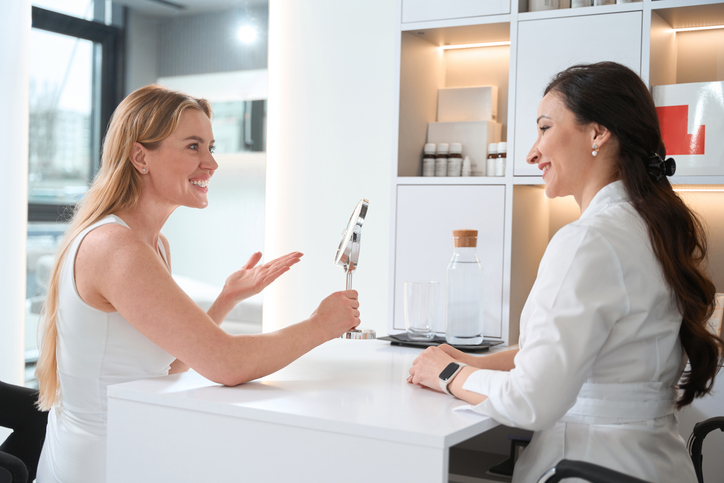
The front desk influences client decisions, but not through persuasion. Its role is to create a calm and structured end to the visit. In this atmosphere, clients naturally decide on next steps.
Front desk sales should not feel like a sales conversation. Clients should not feel that something is being sold to them. Instead, they should feel that they are receiving clear information about continued care and possible next steps.
The front desk supports client decisions through:
a calm atmosphere
a clear summary of the visit
consistency with information given in the treatment room
an unhurried pace
The moment at the front desk
The front desk interaction should not be overloaded with information. After a treatment, clients often need a moment of quiet. Overly intense sales talk can cause withdrawal.
The most effective approach is a brief reference to recommendations already discussed during the service. The client can then decide whether to continue the conversation.
If the client shows interest, answer questions calmly. If not, a brief summary followed by payment is enough.
The front desk should maintain a calm and structured flow at the end of the visit.
Natural product recommendations
Products recommended after a treatment should be presented as part of ongoing care, not as an additional offer. Clients are more likely to decide when communication is concise and factual.
Avoid presenting too many products at once. Too many options create hesitation.
Examples: “This was recommended after today’s treatment.” “You can start using this today.” “It helps maintain the results we’re working toward.”
A short explanation is enough. The decision remains with the client.
Atmosphere at the front desk
The atmosphere has a stronger influence on purchasing decisions than words alone. Rushing, staff conversations, or organizational chaos make clients want to leave quickly.
A calm pace at the front desk supports natural decisions about products or future appointments.
Maintain:
a quiet reception area
no operational conversations in front of clients
consistent communication
a clear closing process
When the client does not decide
Not every client will purchase a product or schedule another visit immediately. In this case, the most important factor is maintaining a positive atmosphere and leaving the door open to revisit the topic later.
Examples: “We can revisit this at your next visit.” “Feel free to reach out if you have any questions.” “You can add this to your routine at any time.”
Closing the visit
The end of the visit should feel calm and predictable. Clients remember the final minutes most clearly.
Examples: “Thank you for coming in.” “See you next time.” “Have a great day.”
Common mistakes
overly intense sales conversations
presenting too many products at once
staff conversations in front of clients
rushing during payment
lack of consistency with provider recommendations
chaos at the front desk
Front desk workflow
calm visit summary
brief reminder of recommendations
product handoff if applicable
payment
calm closing
Quick overview
Stage
Action
Impact
Front desk
Calm visit closing
Client comfort
Information
Brief recommendation reminder
Clarity
Product
Provide recommended item
Supports results
Payment
Organized checkout
Professional impression
Closing
Calm farewell
Strong final impression
Front desk sales should not be treated as a separate stage of the visit. They are a natural part of the closing process. The most important elements are calm communication, organization, and consistency between the treatment room and reception.
Clients who leave without feeling pressured are more likely to return and more likely to decide on products or future visits later.
This lesson is part of the free series The Esthetician Practice Series, which explores real working scenarios in the treatment room and at the front desk, including visit organization and post-treatment communication.
If you want to develop your treatment skills and real clinic work, explore full courses available on our education platform.
If you want to learn effectively and at your own pace, you’re in the right place. Our courses combine years of hands-on experience with detailed treatment protocols, instructional videos, and advanced cosmetology-medical educational materials—designed to support your professional growth regardless of where you are based.
You choose a course and gain immediate access to all online materials after purchase. You learn at your own pace, with 12 months of access to the content and no time pressure. After completing the course, you receive a certificate, and the knowledge you gain can be applied in practice right away.
Beauty Expert Online does not support older browser versions that may not support all site functionalities. Please use the latest browser versions Google Chrome, Firefox, Microsoft Edge or others.