Facial massage – manual techniques, tissue stimulation, and professional application
A classic facial massage represents one of the most fundamental and time-tested manual techniques used in professional skincare and aesthetic practice. It integrates controlled manual movements, targeted muscle engagement, and structured stimulation of the skin and superficial soft tissues to support natural physiological renewal processes. Due to its non-invasive nature and broad applicability, facial massage is widely used in spas, aesthetic settings, and structured home-care routines.
Beyond immediate relaxation, regular facial massage performed with correct technique contributes to gradual improvements in skin tone, tissue vitality, and facial contour definition. Its effectiveness is based on mechanical stimulation rather than aggressive intervention, making it suitable for a wide range of skin types and conditions.
A properly executed facial massage stimulates superficial blood circulation, enhances lymphatic flow, and helps release excessive tension within the facial musculature. These mechanisms improve oxygen and nutrient delivery to the skin while supporting metabolic exchange and waste removal from the tissues.
When incorporated into regular treatment protocols, facial massage may:
improve overall skin brightness and freshness,
reduce facial puffiness and fluid retention,
soften tension-related expression lines,
visually refine facial contours,
enhance penetration and distribution of topical skincare products.
The controlled combination of manual techniques allows for effective tissue activation without compromising skin integrity or provoking unwanted inflammatory responses.
Core manual techniques used in professional facial massage
Effleurage – preparatory and lymph-supportive strokes
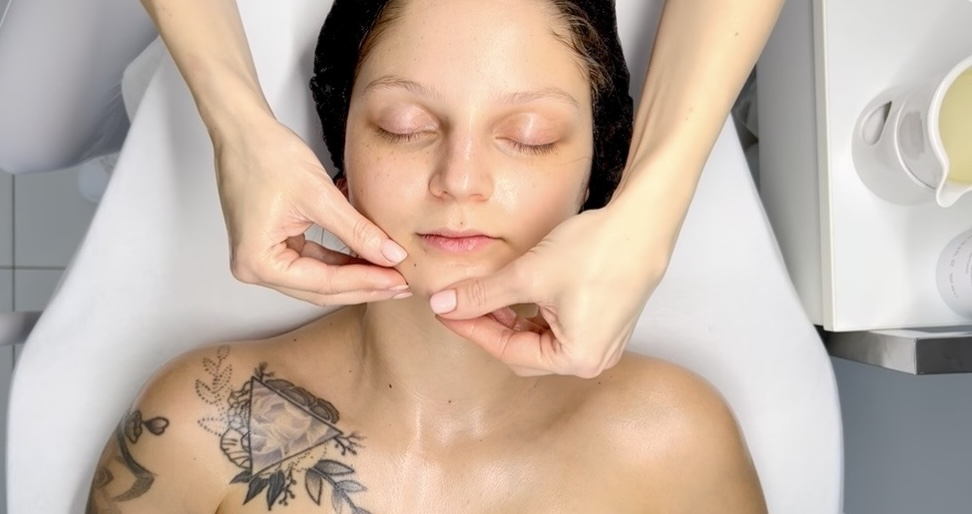
Effleurage consists of light, rhythmic, gliding movements that form the foundation of every facial massage protocol. These strokes help calm the nervous system, prepare the tissues for deeper techniques, and support physiological lymphatic flow.
Effleurage also facilitates even distribution of cosmetic products, improves skin suppleness, and smooths superficial irregularities, making it an essential opening and closing technique.
Friction – localized warming and stimulation
Friction techniques involve controlled circular, spiral, or linear movements applied with moderate pressure. Their primary role is to gently warm the tissues and stimulate localized metabolic activity.
increase flexibility of collagen and elastin fibers,
support tissue oxygenation,
enhance natural skin renewal processes.
Friction is most commonly applied to areas prone to stagnation or reduced circulation, such as the cheeks and perioral region.
Petrissage – deeper muscle engagement
Petrissage techniques involve lifting, rolling, and kneading movements that engage deeper layers of the facial muscles. This method supports mobilization of soft tissues and gradual release of accumulated muscular tension.
supports functional muscle tone,
assists in removal of metabolic by-products,
reduces tightness in high-tension areas such as the jawline and mid-face.
Petrissage is particularly effective when applied along the jawline, over the masseter muscle, and within the cheek area.
Tapotement and vibration – neurosensory techniques
Tapotement and vibration are optional techniques used selectively within facial massage protocols. Gentle tapping stimulates superficial tissues, while fine vibration provides calming neurosensory input that supports overall relaxation.
These techniques are typically introduced briefly and used toward the end of the massage sequence to balance stimulation with relaxation.
Preparation and execution of a professional facial massage
Optimal results from facial massage depend on proper preparation of both the client and the treatment environment. Best practice principles include:
initiating the massage at the décolletage and neck to support natural lymphatic flow,
progressing gradually toward the facial structures,
maintaining fluid, continuous movement patterns,
ensuring stable head and neck support,
adjusting movement tempo according to the intended effect.
Anatomy-based awareness, precise hand placement, and consistent technique are essential to achieve effective and safe results.
Professional relevance of facial massage in aesthetic practice
Classic facial massage remains a core element of aesthetic and wellness treatments due to its ability to support circulation, tissue tone, and neuromuscular balance without invasive intervention. Its cumulative effects contribute to improved skin vitality, enhanced facial harmony, and long-term tissue health.
As a foundational manual technique, facial massage provides a base for more advanced approaches, including lymphatic drainage techniques, sculpting massages, and combined aesthetic protocols.
Structured professional training allows practitioners to perform facial massage safely and effectively by integrating anatomical knowledge with precise manual technique and informed treatment planning.
If you want to learn effectively and at your own pace, you’re in the right place. Our courses combine years of hands-on experience with detailed treatment protocols, instructional videos, and advanced cosmetology and medical educational materials—designed to support your professional growth regardless of where you are based.
You choose a course and get instant access to all materials. Study at your own pace with 12 months of access and no time pressure. After completing the course, you receive a certificate and can apply your knowledge in practice right away.
Beauty Expert Online does not support older browser versions that may not support all site functionalities. Please use the latest browser versions Google Chrome, Firefox, Microsoft Edge or others.