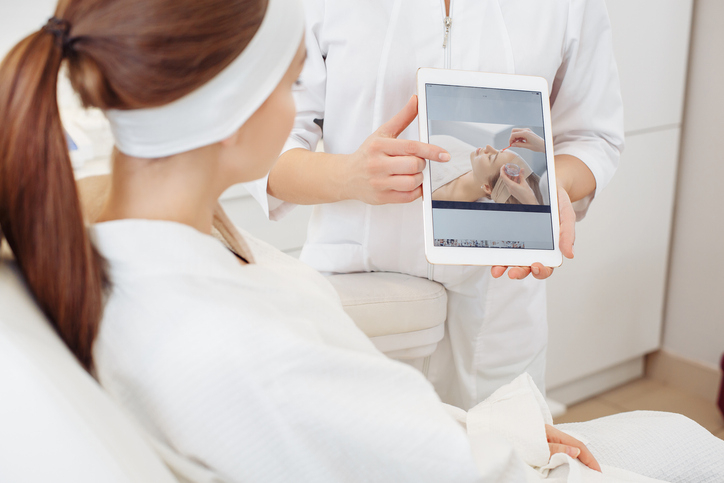
The Esthetician Practice Series is a blog-based series focused on real-world work in the beauty industry. It covers appointment flow, client communication, front desk operations, and managing both the practice and training. Each post reflects everyday situations from professional practice.
All materials are published in a short, focused format. Each article addresses one specific situation from daily practice and can be applied immediately.
The series covers topics such as:
front desk operations and client experience
practice organization and workflow
teaching structure and the role of the instructor
You can read the articles in order or return to selected topics depending on your current needs in the practice.
Welcoming the client on the day of the appointment
The first seconds after the client walks in
The first few seconds after a client enters the practice strongly influence their sense of comfort. At that moment, the client evaluates the atmosphere, organization, and communication style. The goal is not a long greeting, but a calm and clear response.
A short message and a clear indication of what will happen next work best. An overly intense conversation at the entrance creates confusion and distraction.
The greeting should be:
calm
brief
polite
unhurried
Examples: “Good morning, welcome in.” “Let me check your appointment.” “We’ll get started shortly.”
Confirming the appointment
After greeting the client, confirm that the appointment is correctly scheduled. A brief verification prevents mistakes and streamlines the rest of the visit.
Confirm:
first and last name
type of service
appointment time
The communication should remain short and calm.
Example: “You’re scheduled for… at… Let me confirm.”
Waiting time
If the client needs to wait a few minutes, provide a brief update. Lack of communication creates tension and uncertainty.
There is no need for long explanations. A simple message is enough.
Examples: “We’ll invite you in shortly.” “Please have a seat, I’ll let them know you’ve arrived.” “We’ll begin in just a few minutes.”
Communication with the treatment room
The front desk should inform the provider that the client has arrived. The message should be brief and structured. Avoid calling out loudly or creating rushed communication.
Examples: “Your client has arrived.” “Ready for the appointment.”
Efficient communication helps the visit start smoothly and reduces confusion.
Client arrives early
Clients often arrive several minutes early. In this situation, the front desk should remain calm and inform the client of the expected start time.
Examples: “We’ll begin at your scheduled time.” “Please have a seat, I’ll let you know when we’re ready.”
There is no need to rush the previous appointment.
Client arrives late
If the client arrives late, the front desk should calmly check what adjustments are possible. Short, professional communication helps maintain control of the day.
Examples: “Let me see how much time we have.” “I’ll check with the treatment room.”
Avoid commenting on the delay or creating tension.
Front desk behavior
The front desk should remain calm and organized. Clients observe staff behavior before the treatment even begins.
Focus on:
brief communication
consistent information
no private conversations in front of clients
a clear visit flow
Common mistakes
no reaction when the client enters
front desk chaos
no information about waiting time
rushed communication with the treatment room
unnecessary hurry
private conversations in front of clients
Client check-in framework
brief greeting
appointment confirmation
waiting time information
notification to the treatment room
calm start of the visit
Quick summary
Stage
Action
Why it matters
Arrival
Brief greeting
Creates comfort
Confirmation
Verify appointment
Prevents errors
Waiting
Inform about timing
Reduces tension
Communication
Notify treatment room
Smooth transition
Start
Calm handoff
Strong first impression
The way a client is welcomed shapes their perception of the entire practice before the treatment even begins. A short, calm greeting and a clear structure during the first minutes prevent tension and create a sense of order.
A consistent check-in framework helps maintain control of the workday, reduces scheduling errors, and ensures each visit begins in a calm and professional atmosphere.
If you want to develop your treatment skills, explore our training programs available on the platform.
If you want to learn effectively and at your own pace, you’re in the right place. Our courses combine years of hands-on experience with detailed treatment protocols, instructional videos, and advanced cosmetology-medical educational materials—designed to support your professional growth regardless of where you are based.
You choose a course and gain immediate access to all online materials after purchase. You learn at your own pace, with 12 months of access to the content and no time pressure. After completing the course, you receive a certificate, and the knowledge you gain can be applied in practice right away.
Beauty Expert Online does not support older browser versions that may not support all site functionalities. Please use the latest browser versions Google Chrome, Firefox, Microsoft Edge or others.