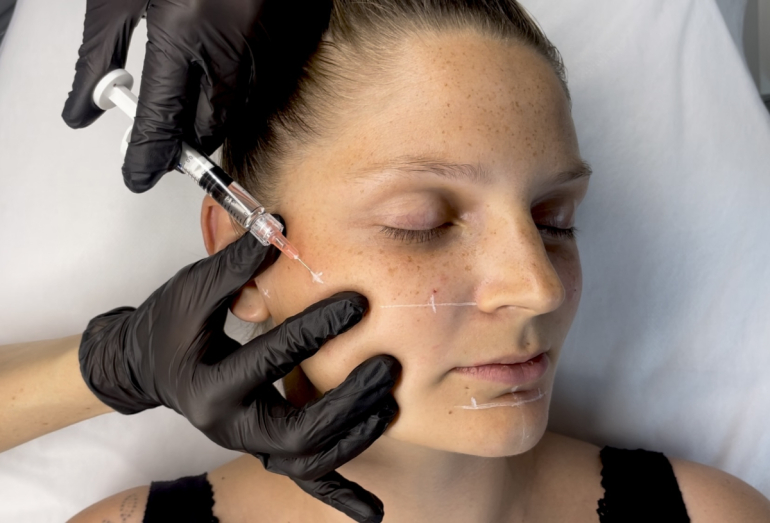
The Esthetician Practice Series is a blog-based series focused on real-world work in the beauty industry. It covers appointment flow, client communication, front desk operations, and managing both the practice and training. Each post reflects everyday situations from professional practice.
All materials are published in a short, focused format. Each article addresses one specific situation from daily practice and can be applied immediately.
The series covers topics such as:
front desk operations and client experience
practice organization and workflow
teaching structure and the role of the instructor
You can read the articles in order or return to selected topics depending on your current needs in the practice.
How to build an offer that stabilizes revenue in a beauty practice
A system instead of a service list
Financial stability in a beauty practice is not the direct result of how many treatments are performed. It comes from the architecture of the offer and the way it is operationally designed.
A random, unsegmented service list creates decision fatigue, makes schedule management difficult, and prevents control over revenue structure.
The client should not see a collection of unrelated services. They should see a logically structured system that guides them through consecutive stages of treatment and care.
In practice, this means designing the offer so that it:
guides the client from the first visit,
creates predictability in future bookings,
differentiates pricing levels,
allows time scaling,
stabilizes schedule occupancy.
A stable calendar does not happen by accident. It is the result of a planned client progression model.
Minimum structure of a revenue-stabilizing offer
To stabilize the schedule and revenue, the offer should include the following functional segments:
Offer segment
Function within the system
Core treatments
Generate consistent, repeat traffic
Specialized treatments
Address specific skin concerns or conditions
Premium treatments
Increase experience level and unit price
Short treatments
Fill schedule gaps
Long treatments
Increase hourly revenue
Packages and treatment series
Create revenue predictability and shorten decision-making through clear segmentation
This structure allows you to actively manage:
average ticket value,
hours sold per day,
seasonality,
client turnover,
visit repeatability.
Massage – offer construction framework
Structure to implement in your pricing menu
In massage services, time management and perceived value are critical.
1. Time scaling
Each core massage offered in 30 / 60 / 90 / 120-minute options.
Operationally:
separate booking slots in the system,
price adjusted proportionally to duration,
control of price per minute.
Outcome:
flexibility for different budgets,
ability to fill various time gaps,
natural growth of average ticket value.
2. One technique – multiple durations
Instead of creating many similarly structured massage names:
limit the menu to 8–15 core techniques,
scale each by time.
Outcome:
clearer offer,
less decision confusion,
higher sales with a simplified menu.
3. Visit packages
Any massage requiring repetition should be available in 6- or 10-session packages.
Operationally:
10–15% discount for upfront payment,
clear communication of savings.
Outcome:
steady revenue,
lower risk of empty days,
higher retention.
4. Short treatments
Examples: head, back, or foot massage 20–40 minutes.
Operationally:
scheduled between longer visits,
available as quick booking slots.
Outcome:
gap filling,
additional revenue without extending work hours.
5. Long treatments
90–120-minute rituals.
Marketed as an experience, not just a “longer massage.”
Outcome:
higher revenue with fewer clients, better hourly profitability.
6. Segmentation
Divide into:
relaxation,
therapeutic,
body contouring.
Separate website categories.
Outcome:
faster client decisions,
easier service matching.
7. Therapeutic services
Spinal massage, sports massage.
Always recommended in 6–10 session series.
Outcome:
regular returns,
predictable calendar.
8. Premium services
Signature rituals with proprietary names.
Higher unit price + detailed experience description.
Outcome:
higher margins,
expert positioning.
9. Couples treatments
Parallel sessions on two tables.
Outcome:
higher hourly revenue with dual occupancy.
10. Add-ons
Aromatherapy, body wrap, exfoliation.
Added as optional upgrades during booking.
Outcome:
increased ticket value within the same schedule structure.
11. Seasonal packages
Winter repair, summer drainage.
Limited-time offers for 2–3 months.
Outcome:
stabilized sales during slower seasons,
stimulated booking decisions.
Cosmetology – offer construction framework
Structure to implement in your pricing menu
In cosmetology services, logical treatment sequencing and clear client guidance are essential.
1. Recognizable treatments
Hydrafacial, microneedling, chemical peels.
Operationally:
use names clients actually search for.
Outcome:
increased search traffic,
shorter education phase.
2. Brand-name treatments
For example PRX-T33, BioRePeel, Profhilo.
Outcome:
shorter decision process through brand recognition.
3. Treatment variants
Face / face + neck / face + neck + décolleté.
Pricing proportional to treatment time.
Outcome:
natural price scaling,
higher average visit value.
4. Core treatments
Deep cleansing, maintenance facials.
Recommended every 4–6–12 weeks.
Outcome:
steady repeat traffic.
5. Specialized treatments
Medical peels, microneedling.
Designed in 3–6 session series.
Outcome:
structured treatment plans,
predictable calendar.
6. Premium treatments
Signature protocols, combined therapies.
Higher price + consultation qualification.
Outcome:
higher unit revenue.
7. Combined treatments
For example chemical peel + microneedling.
Package priced lower than two separate sessions.
Outcome:
increased ticket value.
8. Short treatments
Consultations, express treatments 20–30 minutes.
Scheduled between longer appointments.
Outcome:
fuller daily occupancy.
9. Long treatments
Comprehensive 90-minute therapies.
Booked on selected days.
Outcome:
controlled workload distribution.
10. Introductory offer
Entry-level treatment for new clients.
Lower price for the first visit.
Outcome:
new client acquisition.
11. Loyalty offer
Advanced therapies after completing a basic series.
Outcome:
increased lifetime client value.
12. Treatment series
All cyclical therapies offered as packages.
Payment upfront or in installments.
Outcome:
revenue stability,
calendar predictability.
Massage and cosmetology differ in technique, but the mechanism of building stable revenue is identical.
Profitability is not determined by the number of services — it is determined by system design.
Segmentation instead of a random list
A clear division into core, specialized, and premium services:
shortens decision-making,
simplifies navigation,
supports strategic revenue management.
Series instead of single visits
Treatments requiring repetition should be structured as therapeutic processes.
Outcome:
predictable schedule,
better treatment results,
higher long-term client value.
Packages instead of one-time decisions
Prepaid packages:
stabilize revenue,
reduce empty slots,
limit repeated buying decisions.
Multiple price levels instead of one rate
Basic, extended, and premium tiers:
serve different budgets,
increase average ticket value,
maintain service standards.
Scaling instead of multiplying names
30, 60, 90-minute options within one technique or — in skincare — scaling by treatment area:
increase scheduling flexibility,
improve time management,
maintain offer clarity.
Quick summary
Area
Key action
Practical outcome
Offer design
System instead of random service list
Predictable schedule and revenue control
Segmentation
Core, specialized, premium structure
Faster client decisions and strategic sales control
Treatment series
Design in 6–10 visit cycles
Consistent traffic and continuity
Packages
Upfront or installment payments
Revenue stability and fewer empty days
Time scaling
30 / 60 / 90 / 120-minute options
Flexible scheduling and higher average visit value
Area scaling
Face / face + neck / face + neck + décolleté and selected body zones
Natural ticket growth without multiplying service names
Short treatments
20–40 minute slots between longer visits
Higher daily occupancy
Long treatments
90–120 minute experiences
Higher hourly revenue
Premium services
Signature therapies with higher pricing
Stronger margins and expert positioning
Intro offer
Entry treatment for new clients
New traffic generation
Loyalty offer
Advanced therapies after base series
Increased lifetime client value
Financial stability does not come from the number of services offered. It comes from the structure of the system that guides the client from the first visit through every next stage.
If you want to develop your treatment skills, explore our training programs available on the platform.
If you want to learn effectively and at your own pace, you’re in the right place. Our courses combine years of hands-on experience with detailed treatment protocols, instructional videos, and advanced cosmetology-medical educational materials—designed to support your professional growth regardless of where you are based.
You choose a course and gain immediate access to all online materials after purchase. You learn at your own pace, with 12 months of access to the content and no time pressure. After completing the course, you receive a certificate, and the knowledge you gain can be applied in practice right away.
Beauty Expert Online does not support older browser versions that may not support all site functionalities. Please use the latest browser versions Google Chrome, Firefox, Microsoft Edge or others.