Japanese lifting massage is an advanced form of manual facial therapy. Its effectiveness comes not from a single movement or technique, but from combining multiple methods of working with the facial muscles, fascia, superficial and deeper tissues, microcirculation, and lymphatic flow.
The treatment uses a comprehensive approach that combines precise manual work, tissue mobilization, drainage, lifting, pressure point stimulation, and relaxation techniques within a structured facial treatment.
Unlike many cosmetic treatments that focus primarily on the surface of the skin, Japanese lifting massage works on several tissue levels at the same time.
It can influence:
the skin
facial expression muscles
fascial tissues
superficial and deeper tissues
microcirculation
lymphatic flow
muscle tension
This multi-level approach is one of the reasons Japanese lifting massage is often described as a natural manual facial lifting method.
How Does Japanese Lifting Massage Work?
The effectiveness of Japanese lifting massage comes from sequential manual work in which each stage of the treatment prepares the tissues for the techniques that follow.
The mechanism can be simplified as:
→ tissue relaxation → mobilization of muscular and fascial structures → stimulation of microcirculation → support of lymphatic drainage → deeper tissue work → lifting and facial contouring techniques
Each stage has a specific purpose and contributes to the overall treatment effect.
What Are the Stages of Japanese Lifting Massage?
Japanese lifting massage follows a structured sequence of manual techniques rather than a random series of movements.
A complete treatment may include:
dry techniques and work with a massage medium → tissue relaxation → muscle mobilization → lymphatic drainage → deeper manual techniques → lifting techniques → pressure point stimulation → treatment closure
This progression allows different tissue layers to be addressed gradually and in a controlled way.
Which Techniques Are Used in Japanese Lifting Massage?
One of the distinguishing features of Japanese lifting massage is the variety of manual techniques used throughout the treatment.
These may include:
superficial techniques – used to prepare and relax the tissues
mobilization techniques – designed to work with muscular and fascial tension
pressure point techniques – used for targeted manual stimulation
lymphatic drainage techniques – supporting lymphatic flow and reducing puffiness
lifting techniques – supporting facial contouring and tissue tone
deep tissue techniques – used to work with deeper muscular and fascial structures
The combination of these techniques creates a comprehensive manual treatment for the face and surrounding tissues.
Why Does Japanese Lifting Massage Use Different Movement Speeds?
A characteristic element of Japanese lifting massage is the use of different movement speeds and rhythms.
Slower phases:
tissue relaxation → reduction of muscular tension → preparation of the tissues for deeper manual work
Dynamic phases:
tissue stimulation → increased microcirculation → activation of deeper tissue structures → support of the lifting effect
Alternating slower and faster techniques allows the therapist to combine relaxation and tissue stimulation within the same treatment.
Which Areas Does Japanese Lifting Massage Treat?
Japanese lifting massage is not limited to the face itself. A complete treatment may involve several interconnected anatomical areas.
work on the scalp → reduction of tension and improved tissue mobility
work on the face → mobilization of facial muscles and fascia
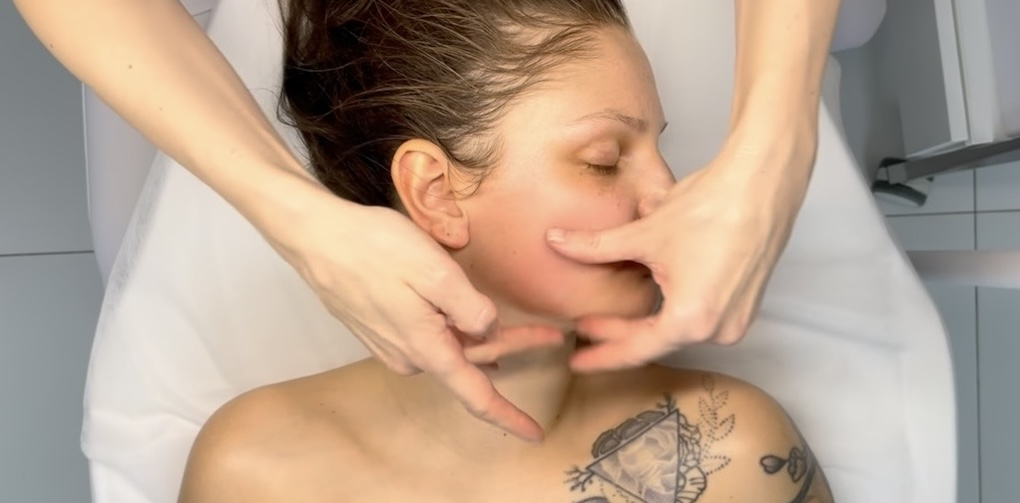
work on the jaw area → reduction of muscular tension and support of facial contouring
work on the neck → release of muscular and fascial tension
work on the décolleté → integration of facial treatment with the upper body
This allows the face to be treated as part of a larger system of muscular and fascial connections.
How Are Pressure Point and Shiatsu Techniques Used?
Pressure point stimulation can be incorporated into Japanese lifting massage as part of targeted manual work.
Pressure may be applied using:
the thumbs → the fingertips → selected areas of the hands
These techniques can support:
reduction of muscular tension → targeted tissue stimulation → relaxation → improvement of client comfort during treatment
Shiatsu-inspired techniques may also be incorporated as part of the pressure point phase of the massage.
How Can Japanese Lifting Massage Improve Skin Quality?
Mechanical stimulation of facial tissues during massage can produce several immediate and cumulative tissue responses.
stimulation of microcirculation → improved blood flow within the treated tissues
lymphatic drainage techniques → support for reducing facial puffiness
muscle and fascial mobilization → improvement of tissue mobility and reduction of tension
manual lifting techniques → temporary improvement in facial contour definition and tissue tone
Regular treatment may also support the overall appearance and condition of the skin as part of a professional facial treatment program.
Why Is Japanese Lifting Massage Called a Natural Face Lift?
Japanese lifting massage combines several forms of manual work that affect different structures of the face.
muscle mobilization → reduction of excessive tension
microcirculation stimulation → improved appearance and freshness of the skin
lifting techniques → support of facial contour definition
lymphatic drainage → reduction of facial puffiness
Because these effects are achieved using manual techniques rather than invasive procedures, Japanese lifting massage is often described as a natural facial lifting treatment.
Who Is Japanese Lifting Massage Suitable For?
Japanese lifting massage can be used as a professional facial treatment for clients who want to improve facial appearance, reduce muscular tension, support microcirculation, and incorporate advanced manual therapy into their skincare routine.
It may be selected for clients concerned with:
loss of skin firmness
reduced facial contour definition
facial muscle tension
tension in the jaw area
facial puffiness
dull or tired-looking skin
visible signs of skin aging
tension affecting the scalp, face, and neck
reduced tissue mobility
clients seeking a non-invasive facial treatment
The treatment can also be incorporated into preventive skincare programs designed to maintain tissue mobility, facial muscle comfort, and overall skin appearance.
Why Can Results Be Visible After the First Treatment?
Some effects of Japanese lifting massage may be noticeable immediately after a treatment because manual work directly influences muscle tension, tissue mobility, microcirculation, and lymphatic flow.
Immediately after treatment, clients may notice:
visible facial relaxation
reduced facial muscle tension
less facial puffiness
a fresher-looking complexion
improved facial contour definition
a feeling of lightness and relaxation in the face and head area
These immediate effects are primarily associated with muscular relaxation, improved circulation, tissue mobilization, and lymphatic drainage.
More sustained results generally depend on individual tissue condition, treatment frequency, and whether the massage is performed as part of a regular treatment series.
Which Treatments Can Be Combined with Japanese Lifting Massage?
Treatment combination
Main goal
Why the combination works well
Japanese lifting massage + facial intradermal therapy
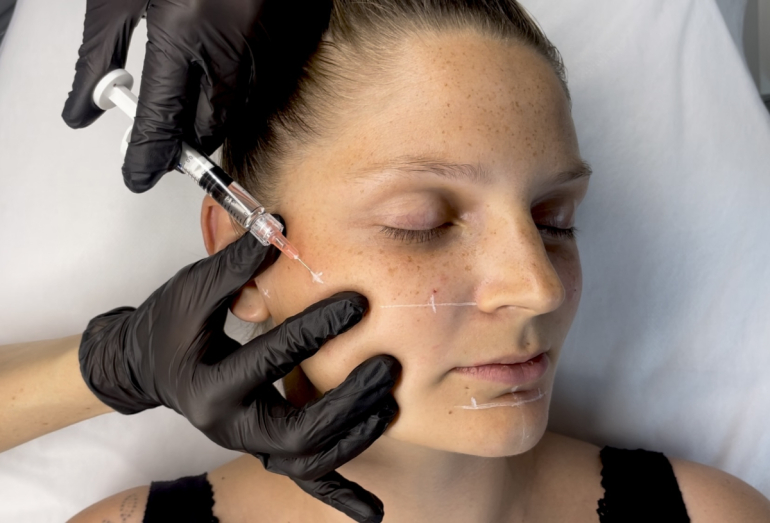
tissue stimulation and skin regeneration
Manual therapy works with muscle and fascial tension, while facial intradermal therapy provides targeted skin microstimulation.
Japanese lifting massage + LED therapy
skin regeneration and recovery support
LED therapy can complement a manual facial treatment as part of a broader skincare protocol.
Japanese lifting massage + Face Taping
support of facial contouring and lymphatic drainage
Face Taping can be used as a complementary technique following manual therapy.
Japanese lifting massage + superficial chemical peel
smoothing and brightening
Professional exfoliation and manual therapy address different aspects of skin appearance and facial treatment.
Japanese lifting massage + facial mask
hydration and soothing
A facial mask can be incorporated after manual treatment as part of a complete skincare ritual.
Japanese lifting massage + facial acupressure
relaxation and targeted pressure point work
Facial acupressure complements manual massage with precise pressure point stimulation.
Why Combine Japanese Lifting Massage with Other Treatments?
Combining complementary techniques allows a professional facial treatment to address different client needs within an individualized treatment plan.
Japanese lifting massage → muscle and fascial work → complementary treatment → broader facial and skincare protocol
Depending on the client’s skin condition and treatment goals, Japanese lifting massage can be offered as a standalone treatment or incorporated into more comprehensive cosmetology protocols.
For beauty professionals, combining complementary treatment methods can also make it possible to create more individualized services and expand the range of facial treatments offered in professional practice.
Japanese Lifting Massage FAQ
Does Japanese lifting massage really work?
Manual facial massage can influence muscle tension, tissue mobility, microcirculation, and lymphatic drainage. These effects may contribute to a more relaxed appearance, reduced puffiness, and improved facial contour definition after treatment.
How many treatments are needed to see results?
Some effects may be noticeable after the first treatment, particularly reduced muscular tension, facial relaxation, and improved skin freshness. More sustained results generally require regular treatments as part of a planned treatment series.
How long do the effects last?
The duration of visible results varies depending on individual muscle tension, tissue condition, lifestyle, and treatment frequency. Regular treatments may help maintain the effects over time.
Is Japanese lifting massage painful?
The treatment should not be painful, although some deeper lifting and mobilization techniques can feel intensive. Pressure and treatment intensity should always be adapted to the client’s comfort and tissue response.
How is Japanese lifting massage different from a regular facial massage?
Japanese lifting massage uses a more complex and structured combination of techniques. It may include different movement speeds, deeper tissue work, muscle and fascial mobilization, lymphatic drainage, lifting techniques, and targeted pressure point stimulation.
If you want to learn advanced Japanese facial lifting massage and understand the manual techniques used in professional facial therapy, they are explained step by step in our Japanese Lifting Massage Online Course.
We’ve been educating the beauty industry for 20 years.
For over 20 years, Beauty Expert has been shaping beauty education, training thousands of students in cosmetology, massage therapy, and aesthetic treatments.
Today, Beauty Expert is one of the leading educational platforms for beauty professionals, offering specialized training programs. Our platform is used by learners from more than 100 countries worldwide.
Create your own learning path in the beauty industry
Beauty Expert School combines cosmetology, massage, manual techniques, advanced beauty technologies, and client care in one comprehensive program. With full access, you receive all 48 lessons immediately, choose the order in which you complete them, and complete the program in one month, a few months, or over the course of a full year.
Beauty Expert Online does not support older browser versions that may not support all site functionalities. Please use the latest browser versions Google Chrome, Firefox, Microsoft Edge or others.