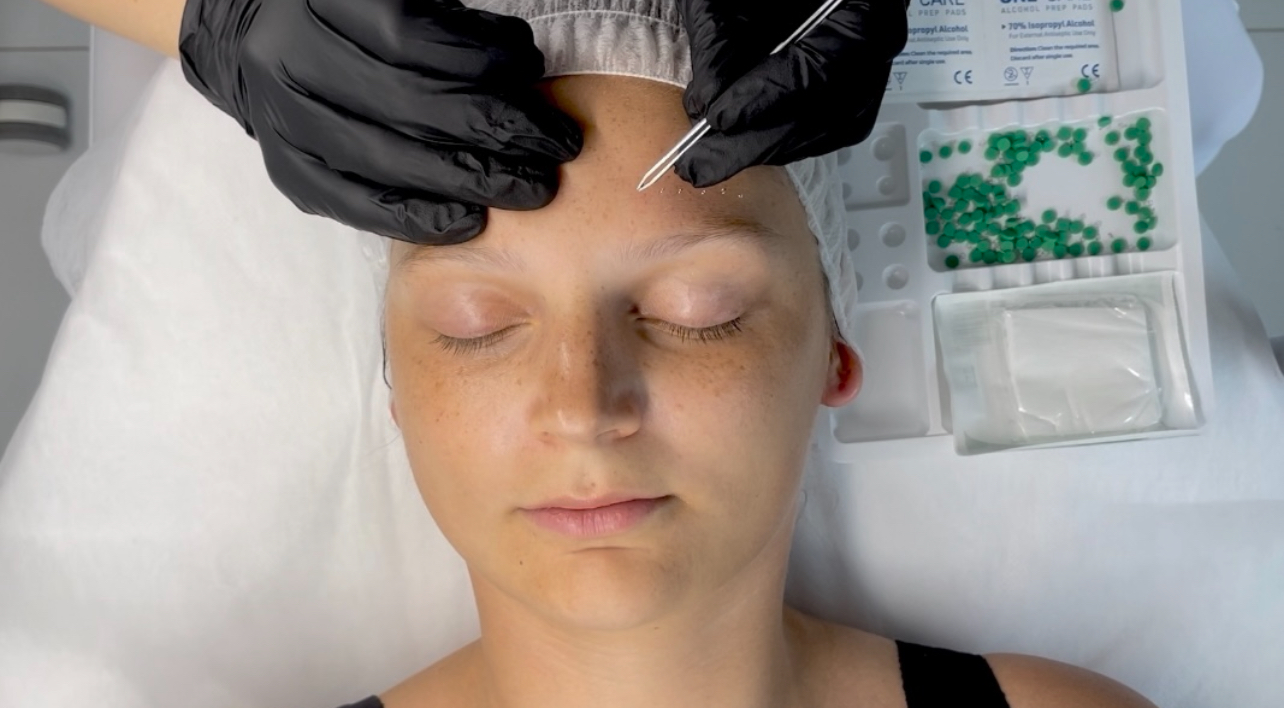
Facial Intradermal Therapy is a precise injection-based technique that involves the placement of short intradermal needles into selected skin points to induce controlled biological stimulation. The procedure initiates regenerative processes within the dermis, stimulates fibroblasts to synthesize collagen, and improves tissue firmness and elasticity, resulting in a visible lifting effect.
This lesson introduces the principles of safe intradermal therapy practice, correct placement of treatment points, selection of appropriate needles and supportive formulations, and proper client qualification. Indications and contraindications, typical skin responses, and the possibility of combining intradermal therapy with other cosmetology procedures are thoroughly discussed.
The learning process includes theoretical content, instructional video materials, step-by-step guidance, and a completion certificate, preparing participants for conscious, safe, and professional performance of Facial Intradermal Therapy in clinical practice.
Learning Outcomes
After completing the lesson, the participant is able to:
explain the concept of facial intradermal therapy as an advanced point-based technique relying on precise mechanical stimulation
discuss the mechanism of action in the context of controlled micro-injury
interpret tissue responses to point-specific stimulation
understand the role of controlled inflammation as a therapeutic component
explain the regenerative processes activated during intradermal therapy
analyze skin responses to micro-injury from a cosmetological perspective
apply general facial anatomy in clinical practice
understand skin anatomy and histology in the context of point-based techniques
interpret skin aging processes at the level of the epidermis, dermis, and deeper tissues
conduct a cosmetological consultation and skin diagnosis in professional practice
analyze skin types and concerns, including dry, dehydrated, oily, and combination skin
consider the specific needs of sensitive, reactive, and vascular skin
recognize edema, lymphatic congestion, and microcirculation disorders
interpret hyperpigmentation and the mechanisms of melanogenesis
understand the pathophysiology of acne vulgaris and rosacea in the context of point-based therapy
properly qualify clients for facial intradermal therapy
identify indications and contraindications for treatment
plan point-based therapy according to treatment goals
individualize therapy based on a personalized Beauty Plan
prepare the treatment area for point-based procedures in a professional setting
work in accordance with principles of hygiene, disinfection, sterilization, and asepsis
apply safety standards specific to point-based techniques
select appropriate tools, preparations, and cosmetic products used in intradermal therapies
properly prepare the client for facial intradermal therapy
perform facial intradermal therapy step by step
apply intradermal needle techniques with controlled depth and pressure
maintain the correct sequence of facial treatment areas
adjust stimulus intensity according to skin response
observe skin reactions during the procedure and respond appropriately
recognize normal skin responses and early warning signs
identify common procedural errors and methods to prevent them
With each completed course, you earn a certificate available in three languages, which you can download immediately after passing the quiz. Step by step, you build your own portfolio of verified skills, develop at your own pace, and strengthen your professional credibility within the beauty industry.
Educating the beauty industry for 20 years
If you want to learn effectively and at your own pace, you’re in the right place. Our courses combine years of hands-on experience with detailed treatment protocols, instructional videos, and advanced cosmetology-medical educational materials—designed to support your professional growth regardless of where you are based.
Beauty Expert Online does not support older browser versions that may not support all site functionalities. Please use the latest browser versions Google Chrome, Firefox, Microsoft Edge or others.